Rising costs are an ongoing challenge for growers, and it is rarely just one area that is affected. Fuel, labour and other essential inputs, like plant protection products and fertilisers, all have a habit of increasing at the same time. Often at points in the season when there is little flexibility to absorb the impact.
What makes this more frustrating is how much of it sits outside of our control, with wider economic and global factors continuing to influence day-to-day running costs without any clear or immediate solution.
While we cannot influence those external pressures, we can look to manage their impact by focusing on the areas we do have control over, and one of the simplest and most effective of those is reducing the number of tractor movements required across the season.
Combining operations is one of the most practical ways to achieve that, with the benefits of running two machines in a single pass surpassing fuel savings, and extending to time and labour savings, a reduction in working hours for the tractor, and limits on compaction in the alleyways.
For some growers, there is also the added benefit of not needing to invest in another tractor or find, train and pay another operator, which is another increasingly relevant consideration.
When carrying out two jobs in one pass, mowing is often the most straightforward operation to double up with, and there are now several different approaches depending on how you prefer to manage weed control within your rows.
Mowing right up to the trunk
Possibly linked to the increased preference for tackling weed control without disturbing the soil, we have been selling a large number of variable-width mowers that will work right up to the base of the trunk, allowing growers to mow and control weeds simultaneously without the need for herbicides or mechanical cultivation.
Fischer’s robust and compact GL4 blade mower uses hydraulically controlled swing wing arms with precision sensors, allowing for accurate mowing right up to the base of trees, vines or tabletop strawberry system legs. The non-rotating protection discs, skid plates and support wheels ensure the machine follows uneven ground closely to maintain a consistent cutting height.
In practice, this allows growers to incorporate weed control into a job they are already doing, rather than treating it as a separate operation, which over the course of a season can make a noticeable difference to both time and fuel use.
For those still using chemical weed control methods, the same GL4 mower can be fitted with a 50, 120 or 200-litre spray tank, mounted above the mower, and connected to covered herbicide arms positioned on the swing-wing arms allowing growers to get the best weed protection results.
Combining mowing with mechanical weed control
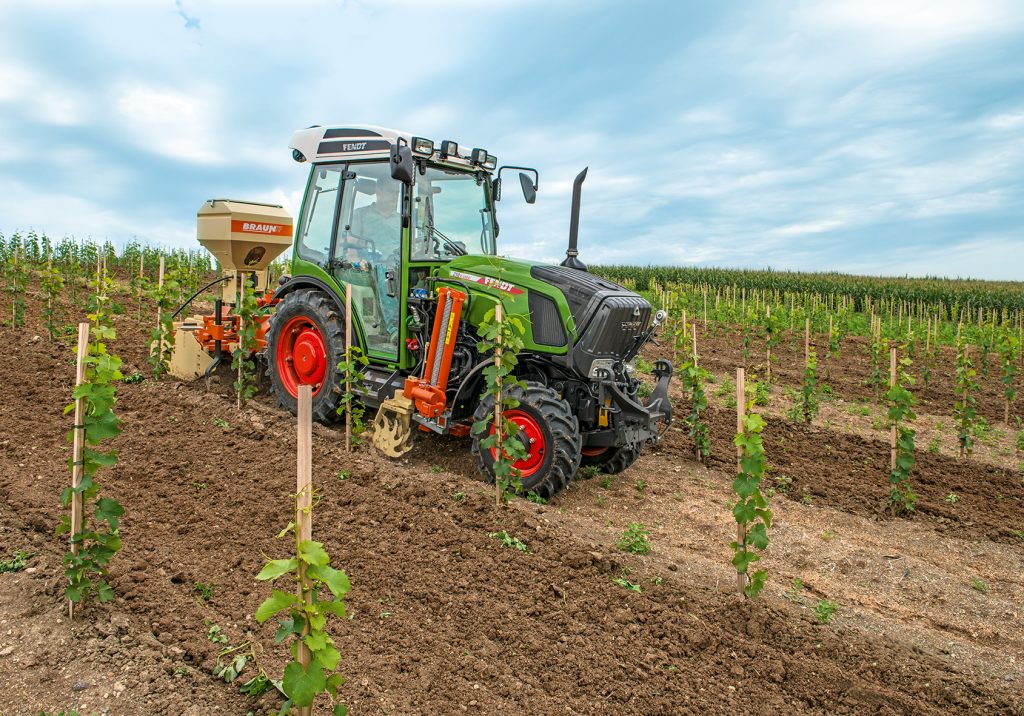
Growers looking to combine mowing and weed management can instead look towards Braun, where the Alpha vari-width mower can be fitted with a range of mechanical weeding tools depending on the approach required.
For the last few years, we have sold a large number of the Braun Vine Stem Cleaners, which, although originally designed for bud rubbing, could be adapted for weed control by replacing the paddles with strimmer cord.
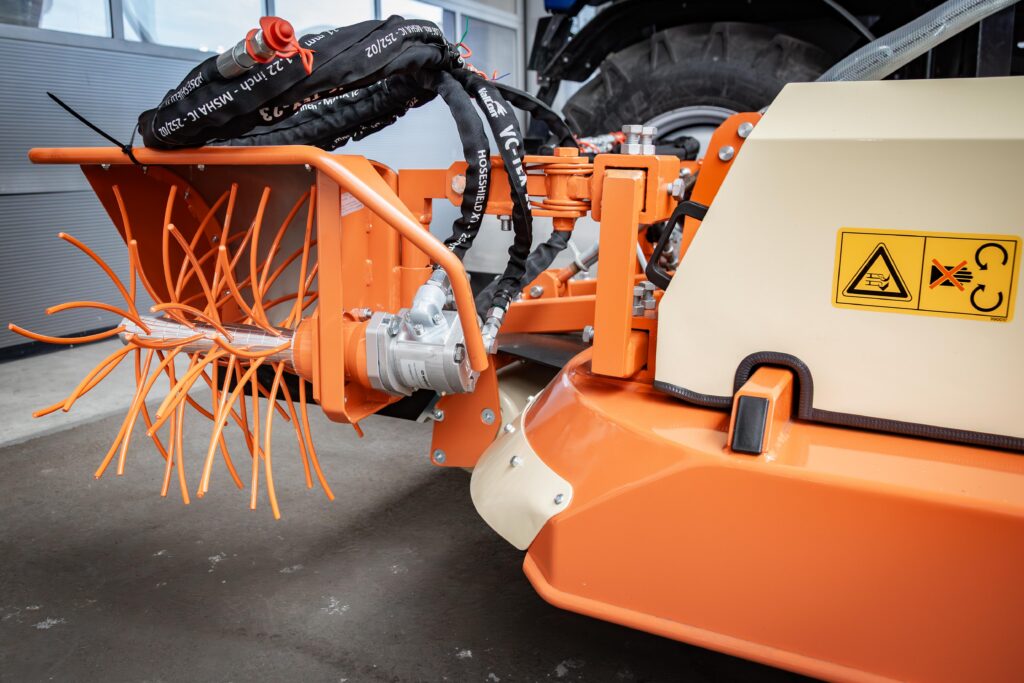
Building on that concept, Braun has now introduced the Modul Clean, which features a larger hydraulic motor and strimmer cord as standard to improve the removal of grass and weeds.
In keeping with Braun’s modular approach, the Modul Clean head can be mounted onto the side of the Alpha mower, allowing growers to tackle undervine weed management and mowing in one pass, rather than returning to the same row multiple times.
In addition to this, Braun has also introduced a new range of undervine rotary brushes, with options suited to different soil types and working preferences, from biodegradable polymer bristles for debris clearing, through to combined and full steel options for more aggressive weeding or very shallow soil disturbance.
While the strimmer-type heads of the Modul Clean allow weed control without interfering with soil structure, some growers prefer to move the soil to create an environment that is less favourable for weeds to establish in the first place.
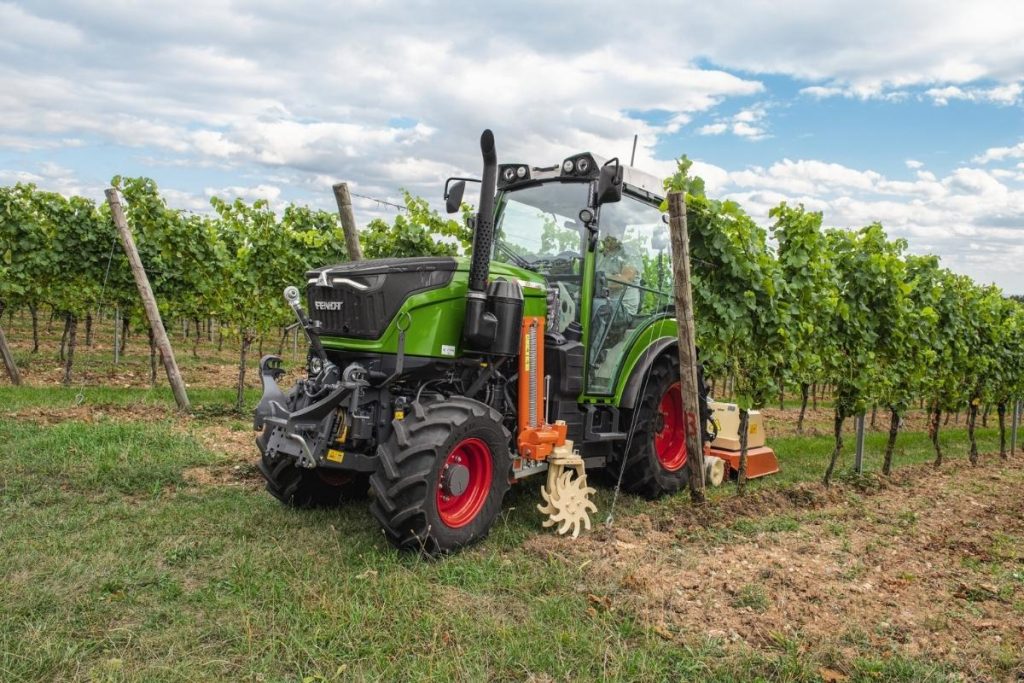
In these cases, the Braun Rollhacke star-shaped finger weeder remains a widely used and well-proven option, particularly because of its ability to adapt to different soil types and conditions.
As the Rollhacke is ground-driven, it can be operated at forward speeds between 4 and 10 kph, meaning it will comfortably work alongside other speed-dependent operations, which opens up the possibility of combining mechanical weeding with spraying or other rear-mounted equipment.
With the ability to mount the Rollhackes on mid or front frames, growers can configure it to suit both vineyard and orchard setups, again reducing the need for additional passes.
Combining mowing and spraying
We have long supplied Perfect van Wamel machines with spray mow technology that allows mowing and spraying to be carried out in one pass.
Rear mounted mowers such as the Perfect T and RN ranges can be fitted with a disconnectable spray mow gearbox, which enables a sprayer to be mounted behind the mower and powered via an additional PTO, effectively combining two operations that would otherwise require separate runs through the orchard or vineyard.
For those opting for the RN range, the two-gear option allows contra-rotating blades for a cleaner cut while also mulching the grass, with the option to fit side chutes to place that organic matter back under the base of the vines or trees.
In setups where a trailed sprayer is being used, machines such as the OCLL QWector 3 offer tank capacities from 1,100 to 2,100 litres and are suited to orchards up to four metres high, with features such as an anti-drift tower and front-mounted air intake helping to maintain consistent spray performance in real working conditions.
Where growers already have a rear-mounted sprayer, a front-mounted mower such as the Perfect TK allows the same principle to be applied, with the mower running ahead of the tractor while spraying takes place behind, keeping everything to a single pass.
Reducing passes with multi-row spraying
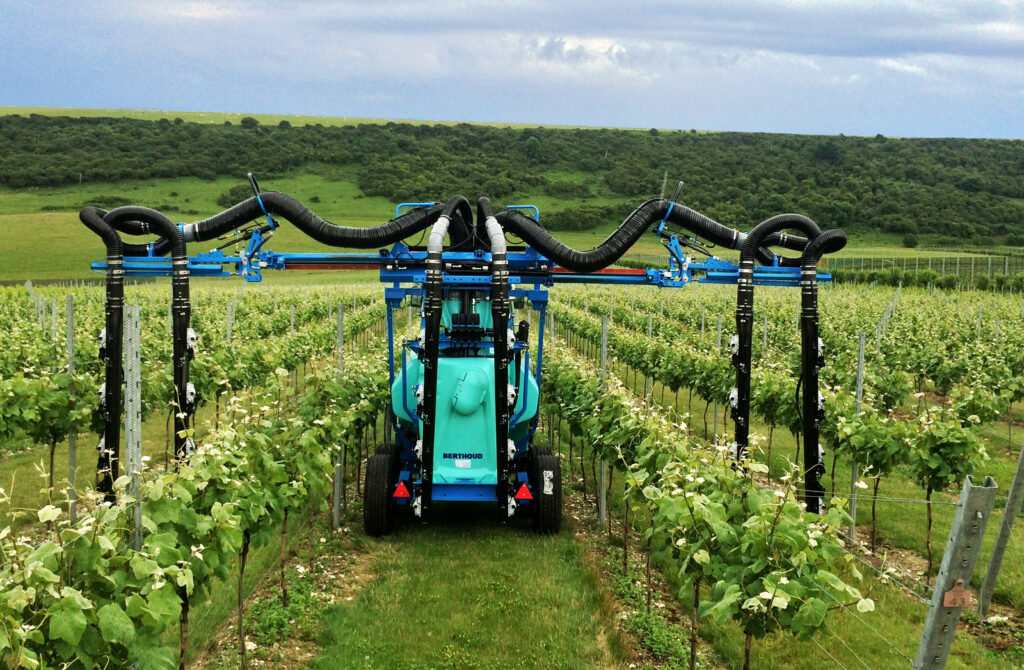
Finally, for those not necessarily looking to combine operations, but instead reduce the number of miles travelled when spraying, multi-row sprayers are becoming an increasingly popular option.
In vineyards, the Berthoud Win’Air suits medium to larger-sized setups, where the ability to cover multiple rows in a single pass can significantly reduce both time and fuel use, while still being compact enough to handle tighter layouts and varied headlands often found in UK conditions.
Albury Organic Vineyard’s estate manager Alex Valsecchi has previously highlighted the benefit of this approach, noting that reducing the number of passes not only cuts fuel and labour costs, but also reduces compaction by limiting how often the same rows are driven on.
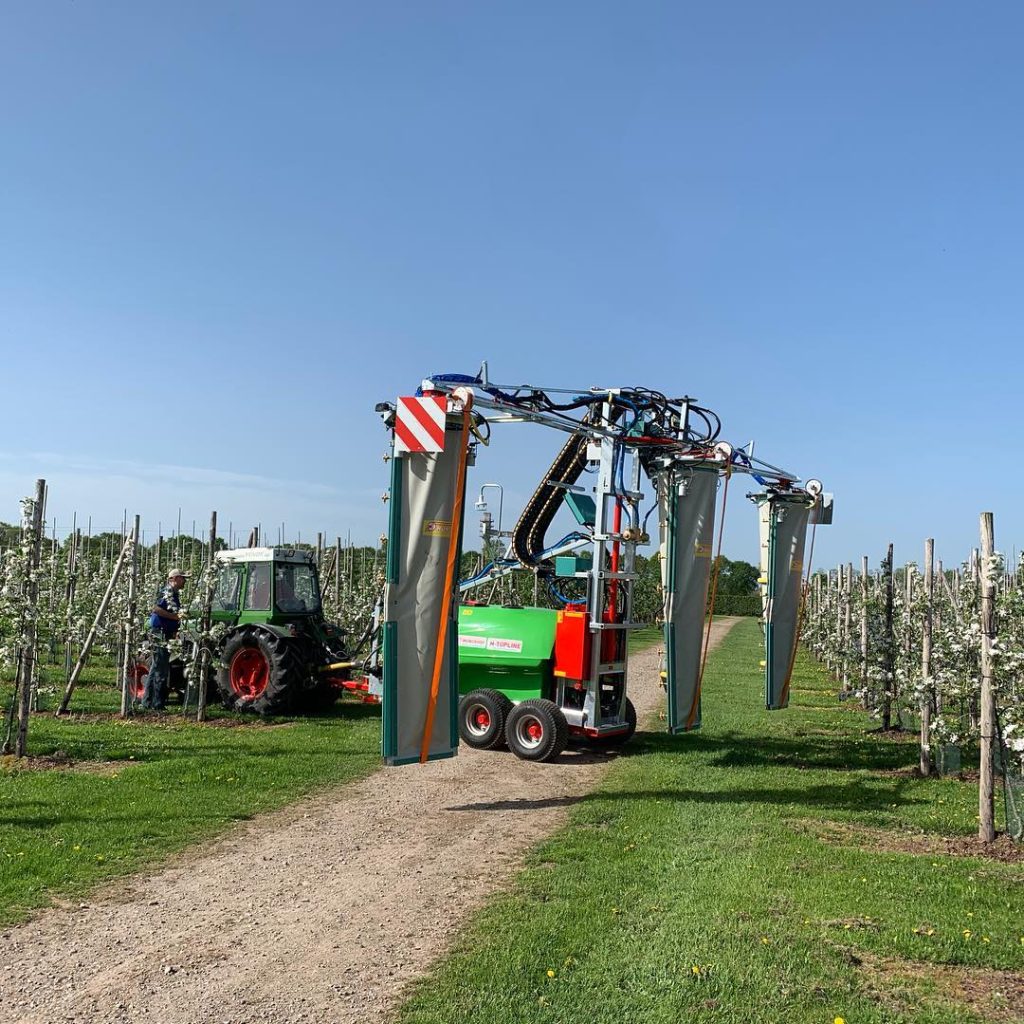
For orchards, the Munckhof VariMAS 3 is designed for larger commercial operations where covering ground quickly and reacting within short spray windows is critical, with the ability to spray three rows simultaneously, reducing labour, fuel use and tractor hours by up to 66 per cent.
Alongside output, accuracy remains key, and with adjustable airflow, pressure, and forward speed, these machines are designed to deliver consistent coverage while minimising drift, helping growers meet increasing expectations around responsible application.
Looking for ways to reduce passes, combine operations, and make better use of each trip through the row can have a meaningful impact over the course of a season. Whether that is mowing closer to the trunk, combining mowing with spraying or mechanical weeding, or increasing the number of rows being sprayed in a single pass, the principle remains the same. Do more with each pass, reduce time in the tractor, and keep fuel use under control where possible.
For more information, please get in touch with our sales team on 01580 712200 or email sales@npseymour.co.uk